Quick Answer
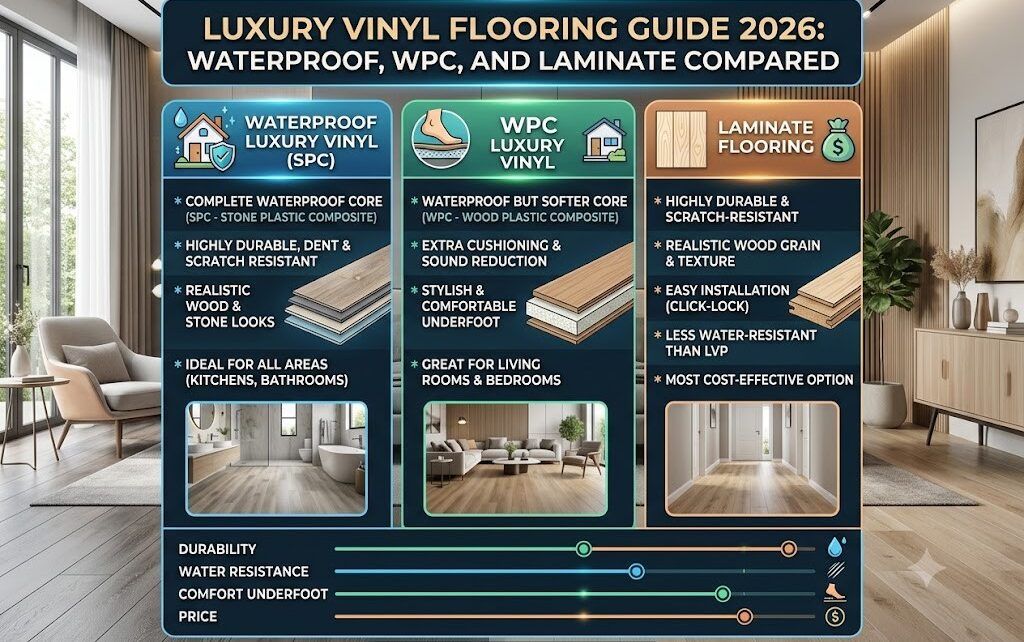
Luxury vinyl flooring (LVF) is a synthetic flooring category that includes luxury vinyl plank (LVP) and luxury vinyl tile (LVT), prized for being waterproof, durable, and easy to install. Within luxury vinyl, WPC (wood plastic composite) flooring offers a rigid, cushioned core ideal for comfort and sound dampening, while laminate flooring — though visually similar — is not fully waterproof and uses a fiberboard core rather than vinyl. For most kitchens, bathrooms, and basements in 2026, waterproof LVP or WPC outperforms laminate in moisture resistance.
Key Facts Table
| Flooring Type | Waterproof? | Core Material | Avg. Cost per Sq. Ft. | Best For |
|---|---|---|---|---|
| Luxury Vinyl Plank (LVP) | Yes | Vinyl/PVC | $2–$7 | Kitchens, bathrooms, basements |
| WPC Flooring | Yes | Wood plastic composite | $3–$8 | High-moisture, high-comfort areas |
| SPC Flooring | Yes | Stone plastic composite | $2–$6 | High-traffic, commercial-style use |
| Laminate Flooring | No (water-resistant only) | Fiberboard (HDF) | $1–$5 | Living rooms, bedrooms |
Introduction
Flooring decisions carry more weight than most homeowners expect — the wrong choice in a moisture-prone room can mean warping, mold, or a full replacement within a few years. Luxury vinyl flooring has become one of the most requested categories at Home Improvement because it delivers the visual appeal of hardwood or stone with genuine waterproof performance. But “luxury vinyl,” “WPC,” and “laminate” are often used interchangeably by shoppers even though they’re structurally different products. This guide breaks down what separates them, where each performs best, and how to choose confidently for your 2026 flooring project.
What Is Luxury Vinyl Flooring?
Luxury vinyl flooring is a multi-layer synthetic product designed to replicate the look of hardwood, tile, or stone. It typically consists of a wear layer, a printed design layer, and a core layer — with the core determining whether the product is standard vinyl, WPC, or SPC.
Luxury Vinyl Plank (LVP) vs. Luxury Vinyl Tile (LVT)
LVP mimics wood-plank flooring in long rectangular pieces, while LVT typically mimics stone or ceramic tile in square or rectangular formats. Both share the same waterproof core technology.
WPC Flooring Explained
WPC stands for wood plastic composite. It uses a rigid core made from a blend of wood pulp, plastic, and foaming agents, giving it a cushioned feel underfoot and above-average sound absorption. WPC is fully waterproof, making it a strong choice for bathrooms, laundry rooms, and basements.
Advantages of WPC
- Fully waterproof core
- Comfortable, slightly cushioned feel
- Sound-dampening properties
- Easier on the back for standing work in kitchens
Laminate Flooring Explained
Laminate flooring uses a high-density fiberboard (HDF) core topped with a photographic layer and protective wear layer. While modern laminate often includes water-resistant coatings and sealed edges, it is not truly waterproof — prolonged water exposure can cause the fiberboard core to swell.
Where Laminate Still Makes Sense
Laminate remains a budget-friendly, scratch-resistant option for low-moisture spaces like bedrooms, hallways, and living rooms, and it’s often more affordable than premium WPC options.
Comparison Table: Waterproof Flooring vs. WPC vs. Laminate
| Feature | Waterproof LVP/SPC | WPC Flooring | Laminate Flooring |
|---|---|---|---|
| Water Resistance | Fully waterproof | Fully waterproof | Water-resistant, not waterproof |
| Underfoot Feel | Firm | Cushioned | Firm |
| Durability | High | High | Moderate to High |
| Installation | Click-lock, floating | Click-lock, floating | Click-lock, floating |
| Best Rooms | Kitchen, bath, basement | Kitchen, bath, basement | Bedroom, living room |
| Resale Perception | Strong | Strong | Moderate |
How to Choose the Right Flooring for Your Space
Step-by-step: Selecting flooring by room
- Identify moisture exposure level (high: kitchen/bath/basement; low: bedroom/living room).
- Choose fully waterproof LVP, SPC, or WPC for high-moisture rooms.
- Consider laminate for low-moisture, budget-conscious rooms.
- Check subfloor condition — WPC’s rigid core tolerates minor subfloor imperfections better than thinner LVP.
- Confirm wear layer thickness (12–20 mil recommended for high-traffic homes).
Installation and Maintenance Basics
Most luxury vinyl and laminate products use a floating click-lock installation system, which doesn’t require nails or adhesive and can often be installed over existing flooring. For maintenance, manufacturers generally recommend sweeping regularly and using a damp (not soaking wet) mop, along with felt pads under furniture to prevent surface scratching.
Frequently Asked Questions
Is luxury vinyl flooring actually waterproof? Genuine luxury vinyl plank (LVP) and WPC/SPC products are fully waterproof at the core level, meaning water won’t cause swelling or warping even with prolonged exposure.
What’s the difference between WPC and SPC flooring? WPC uses a wood-plastic composite core that’s softer underfoot, while SPC (stone plastic composite) uses a denser, more rigid core that’s typically thinner and more impact-resistant.
Can laminate flooring get wet? Modern laminate has water-resistant coatings, but it isn’t fully waterproof — standing water or prolonged moisture exposure can still damage the fiberboard core.
Which is more durable, vinyl or laminate? Both offer good durability, but vinyl generally handles moisture and impact better, while laminate can offer superior scratch resistance in some product lines.
Is luxury vinyl flooring good for resale value? Yes — waterproof luxury vinyl is increasingly viewed favorably by buyers, especially in kitchens and bathrooms, due to its durability and low maintenance needs.
How long does luxury vinyl flooring last? With proper installation and care, quality luxury vinyl flooring can last 15–25 years depending on wear layer thickness and foot traffic.
Can I install luxury vinyl flooring myself? Yes — most click-lock LVP, WPC, and SPC products are designed for DIY installation without specialized tools.
Does WPC flooring need an underlayment? Many WPC products include an attached underlayment pad, but always check manufacturer specifications, as some subfloor types may still require an additional layer.
Is laminate flooring cheaper than luxury vinyl? Generally yes — laminate tends to sit at a lower price point than WPC or premium LVP, though pricing overlaps depending on brand and quality tier.
What flooring is best for a basement? Fully waterproof options like WPC or SPC luxury vinyl are best for basements due to their moisture resistance and stability over concrete subfloors.
Key Takeaways
- Luxury vinyl (LVP/LVT) and WPC are fully waterproof; laminate is only water-resistant.
- WPC offers a cushioned, comfortable feel ideal for kitchens and standing areas.
- SPC is denser and more impact-resistant, suited to high-traffic spaces.
- Laminate remains a solid budget choice for low-moisture rooms.
- Most products install via DIY-friendly floating click-lock systems.
Conclusion
Choosing between luxury vinyl, WPC, and laminate flooring comes down to where the flooring will live and how much moisture exposure it will face. For kitchens, bathrooms, and basements, fully waterproof WPC or LVP is the safer long-term investment. For lower-moisture spaces on a tighter budget, laminate remains a practical and attractive option. Matching the flooring type to the room’s real-world conditions is the single most important decision in any 2026 flooring project.